
Global concerns about plastic pollution are leading some states and countries to take action to reduce the impact of mismanaged plastic. For example, in Canada, the federal government designated plastics as “toxic substances” and has banned single-use plastics including checkout bags; cutlery; ring carriers (that hold beer or pop); stir sticks; and straws (with some exceptions). This designation of plastics as toxic is currently being challenged in court.
Recently, the Biden Administration released “The Draft National Strategy to Prevent Plastic Pollution.” This plan is part of what is referred to as, “EPA’s Series on Building a Circular Economy for All.”
Background on Strategy to Prevent Plastic Pollution
In response to concerns about plastic pollution and marine debris, in 2020, Congress passed the bipartisan “Save Our Seas 2.0 Act.” Title 3 of the Act is “Improving Domestic Infrastructure to Prevent Marine Debris, Section 301 Strategy for Improving Post-Consumer Materials Management and Water Management.” This directed the Environmental Protection Agency (EPA) with developing a strategy to improve post-consumer materials management and infrastructure to reduce plastic waste and other post-consumer materials in waterways and oceans. Congress also asked EPA to “distribute the strategy to states and to make it publicly available.” The EPA says the “National Strategy to Prevent Plastic Pollution” fulfills this mandate (Source: Recycling Today).
Three Objectives of the Plan to Prevent Plastic Pollution
The draft plan, which is open for comment until June 16, 2023, includes three objectives.
Objective A: Reduce pollution during plastic production. Designing products for reuse and recycling, using less impactful materials, phasing out unnecessary products, and ensuring proper controls at plastic production facilities are important upstream actions that manufacturers or consumers can take that can reduce pollution throughout the life cycle of plastic products.
Objective B: Improve post-use materials management. The EPA states “While EPA’s National Recycling Strategy identified actions to improve recycling, further increases in circularity can be achieved through other pathways, such as reuse, refill and composting.”
Objective C: Prevent trash and micro/nanoplastics from entering waterways and remove escaped trash from the environment. Interventions to address trash and microplastics that escape into the environment are necessary for long-term reductions of plastic and other waste in waterways and oceans.
The draft plan includes additional details under each of the stated objectives.
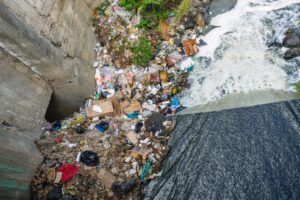
The Draft National Strategy to Prevent Plastic Pollution could have a “material affect” on the regulated community (Photo by Alexander Schimmeck on Unsplash).
Industry Weighs In on the Proposal
The American Chemistry Council released a statement saying in part, “Some components of EPA’s draft strategy align with the federal policy proposal from America’s plastic makers, detailed in our 5 Actions for Sustainable Change, such as expanding recycling capacity and public education on recycling.”
“However, other components of the strategy risk sending plastic manufacturing and jobs overseas where plastic is often made with less stringent environmental standards and more greenhouse gas (GHG) emissions. We caution the Administration that prescribing alternative materials, capping plastic production or limiting innovative recycling technologies could work against its climate objectives as plastic almost always has a lower lifecycle GHG footprint compared to paper and metal.”
Several industry groups have requested the EPA to extend the comment period, which closes on June 16, 2023.
You can see other comments that have been submitted on Regulations.gov.
As a recent blog written by the law firm K&L Gates stated, “Depending on its ultimate composition, the final strategy could materially affect the regulated community, especially those manufacturing plastics, regularly using plastics, and handling waste plastics.”
The Complexity of the Global Problem with Waste Plastic
Plastic pollution is a global ecological issue that has been getting increased attention as images of gyres of plastic pollution in the oceans demonstrate the enormity of waste plastics entering the oceans.
However, many of the proposed solutions seem to be superficial. The move to ban plastic straws, for example, amounts to “feel-good legislation” that does not accomplish much.
The Environmental Group, Earth.Org wrote, “Despite the concerted efforts by corporations, the plastic straws ban has only made a minor difference in plastic waste production.”
Realistically, recycling is not that attractive because in many cases it’s cheaper to simply manufacture new plastic than it is to recycle waste plastic.
Sources of Plastics in Oceans
Until 2018, as much as half of the plastic that was considered recycled in the US was sent to Asia for recycling…but much of this was suspected to be mismanaged and ended up contributing to the global ocean plastic problem. China and other Asian countries have since become very selective and take only high-quality plastic for recycling.
According to Our World in Data, “It is estimated that 81% of ocean plastics come from Asian rivers. The Philippines alone contribute around one-third of the global total.”
The same source states, “Most of the plastic in our oceans comes from land-based sources: by weight, 70% to 80% is plastic that is transported from land to the sea via rivers or coastlines. The other 20% to 30% comes from marine sources such as fishing nets, lines, ropes, and abandoned vessels.”
Finally, they state, “Around one-third of the 100,000 river outlets…modeled contributed to this (plastic pollution). The other two-thirds emitted almost no plastic to the ocean. It’s an important point because we might think that most, if not all, rivers are contributing to the problem. This is not the case.”
While there is likely unanimity with respect to the need to address this ecological issue, it is important to understand the source of the problem so we don’t add another layer of regulations without getting any closer to addressing the problem at hand.
For more information, see the Draft National Strategy to Prevent Plastic Pollution.
Also, see Making Sustainable Change from America’s Plastic Makers.
If you need assistance on an environmental issue (permitting, planning, assessments, closures, litigation support, etc…), contact Jeffrey Bolin, M.S. at 248-932-0228, Ext. 125.
Dragun Corporation does not use artificial intelligence in drafting our blogs or any other material.
This blog was drafted by Alan Hahn. Alan has an undergraduate degree in Environmental Studies and completed a graduate program in Environmental Management. He has worked in environmental management for 45 years. He has written hundreds of blogs and articles. His published work includes Michigan Lawyers Weekly, Detroiter, Michigan Forward, GreenStone Partners, Manure Manager Magazine, Progressive Dairy, and HazMat Magazine.
This blog was reviewed by Jeffrey Bolin, M.S. Jeff is a partner and senior scientist at Dragun Corporation. He is a published author, frequent speaker, and expert witness. His expertise in environmental due diligence, PFAS, vapor intrusion, and site assessments has led to projects in the US, Canada, and overseas. See Jeff’s Bio.
Follow Dragun Corporation on LinkedIn, Twitter, or Facebook.
Sign up for our monthly environmental newsletter.
Principled Foundation | Thoughtful Advice | Smart Solutions
Celebrating our 35th Year 1988-2023