
Addressing per- and polyfluoroalkyl substances (PFAS) in biosolids used for land application on agricultural fields has been one of the thornier PFAS issues. In particular, the concern has mostly centered on two CERCLA (Comprehensive Environmental Response, Compensation and Liability Act) PFAS: Perfluorooctanoic acid (PFOA) and Perfluorooctanesulfonic acid (PFOS).
On July 1, 2026, the United States Environmental Protection Agency (EPA) issued a press release, “EPA Seeks Public Comment on Draft Guidance for Reducing Risk from PFOA and PFOS in Biosolids to Make America Healthy Again.”
Sludge v Biosolids
The terms biosolids and sewage sludge are often used interchangeably; however, the EPA typically uses the term biosolids to mean sewage sludge that has been treated to meet the requirements in the EPA’s regulation entitled, “Standards for the Use or Disposal of Sewage Sludge,” promulgated at 40 C.F.R. Part 503, and intended to be applied to land as a soil conditioner or fertilizer (USEPA).
According to the EPA, as of 2024, nearly 60% of the sewage sludge generated is disposed of as biosolids via land application (only 1% of which is on croplands in the US). The biosolids can be land-applied on agricultural sites, disturbed land in need of reclamation (e.g., overgrazed lands and mines), forests, and more.
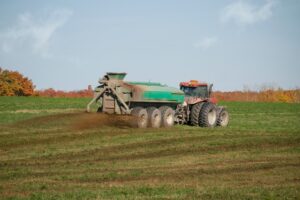
Biosolids are applied to a variety of land types; much of the concern is the potential impact on crops (image purchased from Shutterstock).
EPA Seeks Comments and Finds Flaws in Draft Risk Assessment
As noted by the Law Firm Michael Best, “EPA’s request for comment specifically asks stakeholders whether the agency should reevaluate the framework underlying the Biden Administration’s 2025 draft risk assessment and what additional data should inform future actions regarding PFAS in biosolids. EPA previously extended the comment period on the 2025 draft risk assessment twice to gain further input from experts and stakeholders.”
The EPA stated that it determined the 2025 draft risk assessment “exhibited a number of flaws.” The following is a paraphrase of the stated flaws.
- The EPA departed from typical agency practice by failing to conduct a national survey to document occurrence nationally (to determine how much PFOA and PFOS may actually be present in biosolids).
- The Draft Risk Assessment only evaluated sewage sludge management practices with higher potential for human health risk in hypothetical scenarios that do not reflect the majority of land application in the U.S.
- The preliminary findings of the Draft Risk Assessment suggested that sometimes risks of adverse health effects were possible when using or disposing of sewage sludge containing 1 part per billion (ppb) of PFOA or PFOS. This concentration was only used as a starting concentration to determine if use or disposal would result in any unacceptable risk for the hypothetical circumstances presented. The use of 1 ppb was not intended to be interpreted as a “safe level” of PFOA or PFOS in sewage sludge in all circumstances.
As previously stated, while biosolids are applied to a variety of land types, much of the concern is the potential impact on crops. However, the effect of PFAS on crops is inconclusive, and research is ongoing.
PFAS Biosolids Effect on Crops is Inconclusive
In a July 6, 2026, post from Michigan State University Extension (MSU Extension PFAS Contamination in Agriculture), a paper in The Journal of Agricultural and Food Chemistry was cited. The study examined the uptake of PFAS by mixed forage species in contaminated fields and found a wide variance in bioaccumulation.
“This study found that PFOS (a long-chain PFAS) transfer from soil to forage was significantly greater in the second cuttings. The factors responsible for higher uptake in a second cutting of grass in this study are unclear, though it is thought to be due to a higher proportion of leaf to stem present in the second cutting. Multiple studies have demonstrated that short-chain PFAS accumulation tends to be higher in leaves.”
The Michigan State article also states, “Similar to field crops, many studies in vegetables have found higher PFAS accumulation in leaves and stalks than in the edible fruits and seeds. A study with soils amended with sewage sludge (Lechner and Knapp, 2011), found higher accumulation of PFOA and PFOS in leaves of carrot, cucumber, and potato, and a lesser amount in the peeled edible parts.”
Regulating PFOA and PFOS in biosolids is one of the many increasingly complicated issues surrounding PFAS. If you would like to comment on the EPA’s notice (Guidance: Reducing Risk from Perfluorooctanoic Acid and Perfluorooctane Sulfonic Acid in Biosolids), the comment period was recently extended to October 5, 2026.
PFAS Technical and Litigation Support
If you have questions or need assistance with a PFAS-related issue, we can help. We have hands-on experience in the assessment/remediation of PFAS, and we have provided litigation support on several projects involving PFAS. For more information, contact Jeffrey Bolin, M.S., CHMM, at 248-932-0228, Ext. 125, or Matthew Schroeder, M.S., P.E., Ext. 117.
Alan Hahn drafted this blog. Alan has an undergraduate degree in Environmental Studies and completed a graduate program in Environmental Management. He has worked in environmental management for more than 45 years. He has written hundreds of blogs and articles. His published work includes Michigan Lawyers Weekly, Detroiter, Michigan Forward, GreenStone Partners, Manure Manager Magazine, Progressive Dairy, and HazMat Magazine.
Jeffrey Bolin, M.S., reviewed this blog. Jeff is a partner and senior scientist at Dragun Corporation. He is a published author, a frequent speaker, and an expert witness. His expertise in environmental due diligence, PFAS, vapor intrusion, and site assessments has led to projects in the US, Canada, and overseas. See Jeff’s Bio.
Follow Dragun Corporation on LinkedIn, X, or Facebook.
Sign up for our monthly environmental newsletter.
Principled Foundation | Thoughtful Advice | Smart Solutions
Established in 1988